Understanding “Spot the Difference”
Fundamentally, “spot the difference” is a popular visual puzzle game in which players compare two nearly identical images side by side to uncover a set number of subtle discrepancies. Specifically, players hunt for missing objects, colour changes, or altered shapes. When you spot a variation, you circle the exact difference in either image. More broadly, people use the phrase to describe noticing small distinctions between similar things, ideas, or individuals.
Publishers feature these engaging games across various media. For instance, you can easily find them in children’s activity books, daily newspapers, and modern video games. The creators design these puzzles using either hand-drawn illustrations or digitally manipulated photographs. You can explore many digital examples on puzzle websites like https://krazydad.com or https://www.puzzlechoice.com.
Effective Solving Techniques
To solve these puzzles, players typically rely on methodical visual comparison. If you get stuck, puzzle creators often list the solutions nearby or place them on an accompanying answer page at the back of a book.
However, advanced players use a trick to solve them instantly: they cross their eyes, merging the two pictures into a single image. This method works exactly like viewing an autostereogram (often found on sites that explain stereovision, such as https://www.vision3d.com). Consequently, the discrepancies will appear to blink in and out of your vision, making this an incredibly effective technique for conquering even the hardest puzzles.
Cognitive Benefits for Your Brain
Ultimately, playing “Spot the Difference” games provides excellent exercise for your brain. Because the game requires intense focus, it actively improves your attention to detail and trains your working memory. Furthermore, the active scanning process stimulates specific visual processing areas located in the brain’s parietal and occipital lobes. These puzzles offer a highly entertaining way to build concentration, visual attention, comparison, and scanning skills. For more information on how visual puzzles impact cognitive health, visit resources such as https://www.cognifit.com.
If you find this content useful, please leave a comment or click the like button below.
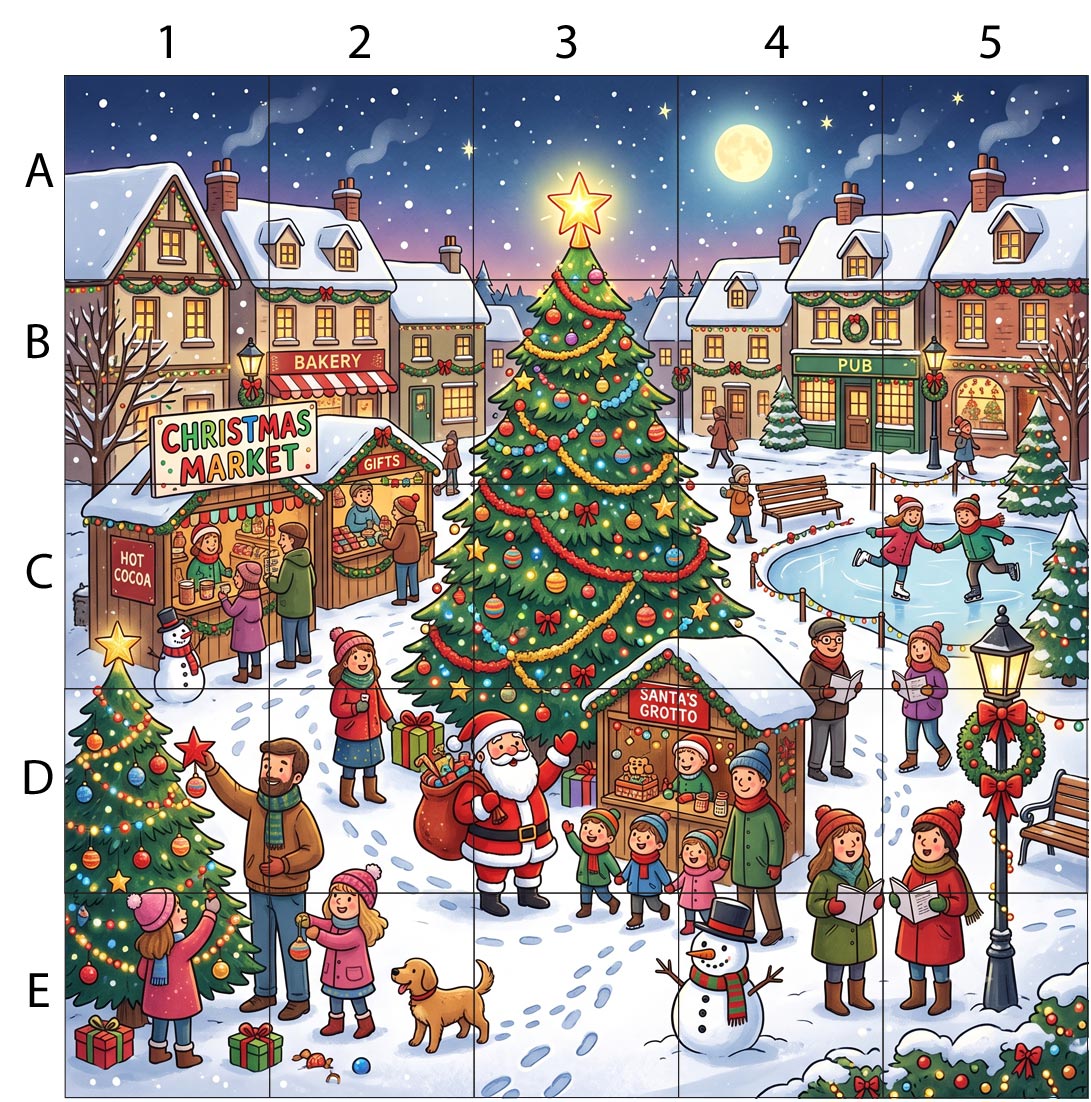
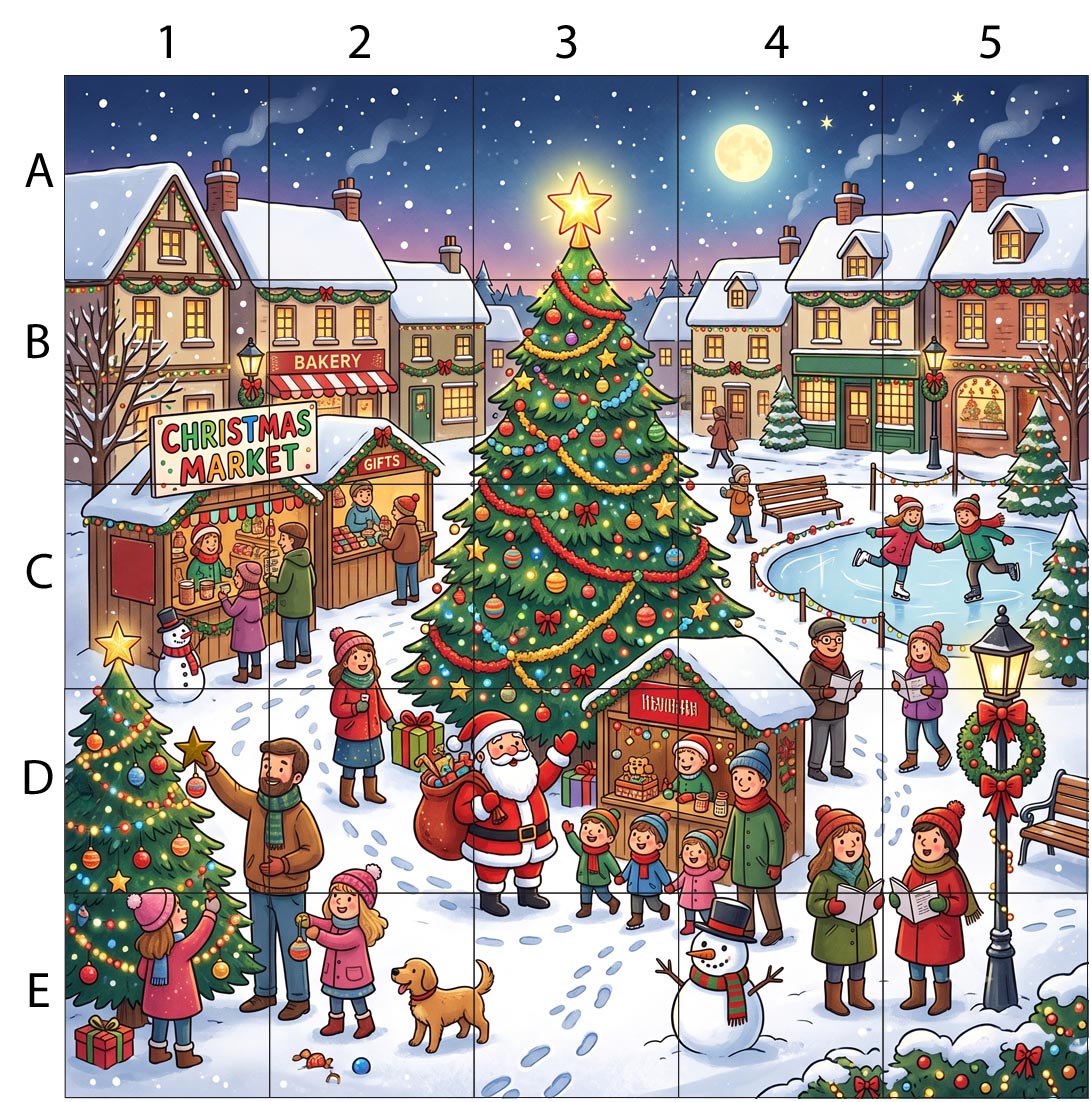
| A2 Star | E4 Snowman’s buttons | C2 Garland | B2 Garland in gift stall |
| B4 Wreath | E1 Green parcel | C1 Hot Cocoa | A2 Dormer windows |
| D3 Santa’s Grotto | D1 Blue bauble | D1 Star colour | C1 Dustbin |
| B5 Woman walkingB | B3 Colour of bauble | D5 Lights | A3 Star |
| B4 Lamp post | E3 Dog footprints | B2 Person by gift stall | B4 Pub sign |